
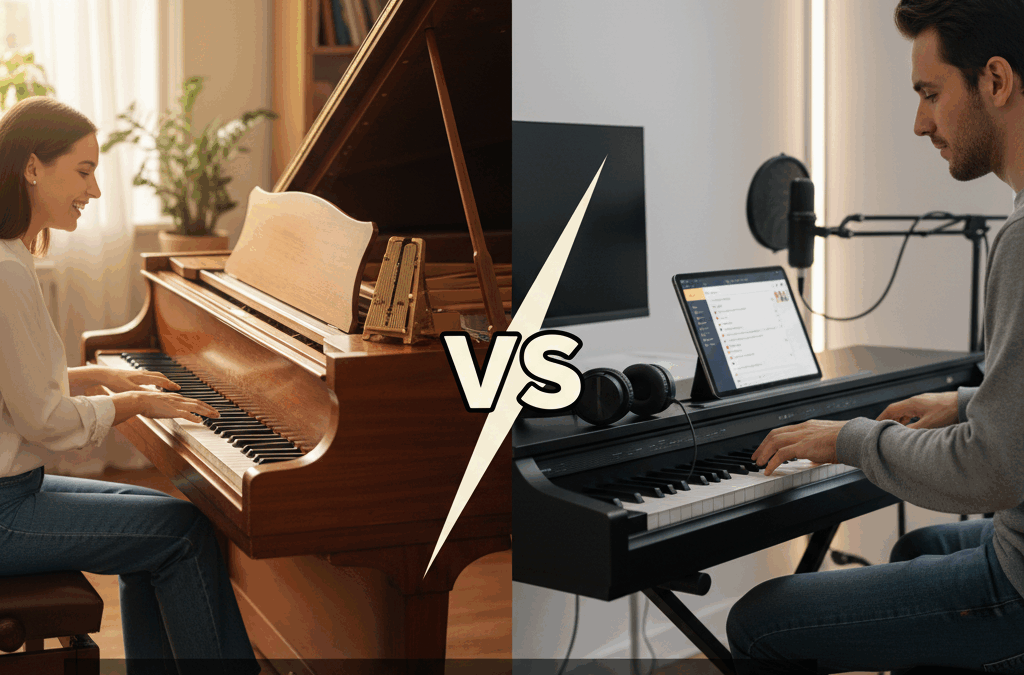
Choosing between an acoustic piano and a digital piano is one of the first big decisions for any beginner pianist. Both types have unique advantages and considerations that can influence your learning experience, budget, and lifestyle. This guide will help you understand the key differences and decide which piano suits your needs best.
What is an Acoustic Piano?
An acoustic piano is the traditional piano with strings and hammers inside a wooden case. When you press a key, a hammer strikes a string to produce sound naturally.
Pros:
- Authentic sound and feel: The rich, resonant tone and dynamic response are unmatched, offering a tactile experience that many pianists cherish.
- Expressive touch: The mechanical action allows nuanced control over volume and tone.
- Aesthetic and heirloom value: Acoustic pianos are often beautiful pieces of furniture and can be passed down generations.
Cons:
- Size and weight: Acoustic pianos are large and heavy, requiring significant space.
- Maintenance: They need regular tuning and care to stay in optimal condition.
- Cost: Generally more expensive upfront and over time due to maintenance.
What is a Digital Piano?
A digital piano uses electronic sound samples and speakers to replicate the sound of an acoustic piano. It often features weighted keys to simulate the feel of an acoustic piano.
Pros:
- Portability and size: Digital pianos are compact and lightweight, ideal for small spaces or musicians on the go.
- Maintenance-free: No tuning required, and they are less sensitive to environmental changes.
- Features: Many models include headphone jacks for silent practice, built-in metronomes, recording capabilities, and connectivity to apps like Skoove, which is excellent for beginners[1].
- Cost-effective: Usually more affordable than acoustic pianos, especially for beginners.
Cons:
- Sound authenticity: While high-end digital pianos (like the Yamaha P225 or Casio AP-550) offer impressive sound and feel, they may still lack the full resonance and subtlety of an acoustic piano[10][3].
- Touch sensitivity: Some digital pianos may not perfectly replicate the nuanced touch of an acoustic piano, though models with “Ivory Feel” keys come close[3].
Key Differences for Beginners
| Feature | Acoustic Piano | Digital Piano |
|---|---|---|
| Sound Quality | Natural, rich, resonant | Sampled, improving with technology |
| Touch & Feel | Authentic hammer action | Weighted keys simulate hammer action |
| Maintenance | Requires tuning and care | Virtually maintenance-free |
| Portability | Heavy and bulky | Lightweight and portable |
| Practice Options | No silent practice | Headphones and learning apps support |
| Cost | Higher initial and upkeep costs | Generally more affordable |
Which Should You Choose?
- Choose an acoustic piano if: You have space, budget, and want the authentic piano experience with rich sound and touch. Ideal for those committed to long-term playing and performance.
- Choose a digital piano if: You need portability, silent practice options, and a budget-friendly instrument. Perfect for beginners, apartment dwellers, or those who want to integrate technology like online lessons (e.g., Skoove)[1].
Tips for Beginners
- Try both types in person to feel the difference in touch and sound.
- Consider your living situation: noise restrictions may favor digital pianos.
- Use digital pianos with apps for guided learning and feedback.
- Remember, the best piano is the one you will enjoy playing regularly.
Starting your piano journey is exciting, and whether you pick acoustic or digital, the key is consistent practice and passion. Both instruments can open the door to musical creativity and joy.